











The Russian invasion of Ukraine has implications not only in people’s lives, but also in finance. In response to the Russian invasion, the United States and other European countries have chosen to apply unprecedented sanctions. This is not the first time Russia has imposed sanctions. Following their invasion of Crimea in 2014, the US banned Americans from doing business with Russian banks, oil and gas developers, and other businesses. According to economists, sanctions implemented by Western countries cost Russia $50 billion every year. But, in the current situation, can crypto assist Russia in evading EU sanctions?
Cryptocurrencies and other digital assets have exploded in popularity since then, which is bad news for those implementing the penalties. There are no technical barriers to Russia and its billionaires trading cryptocurrencies, unlike in the global financial system, where central authorities may prevent Vladimir Putin’s regime from accessing the Kremlin’s foreign funds and Russian banks from using the SWIFT payments network. The Russian currency has plummeted as a result of the sanctions. This has sparked a debate about whether cryptocurrencies, particularly bitcoin, may be used by persons on sanction lists to get around the limits.
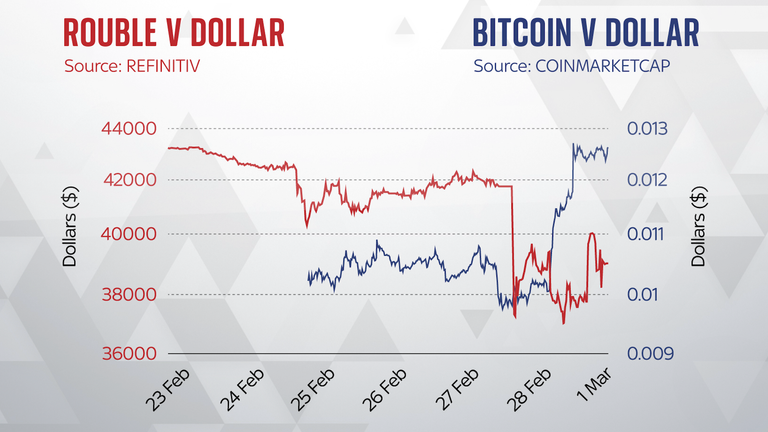
This is due to the fact that bitcoin and other digital currencies are frequently decentralized, which means they are neither issued or managed by a central authority such as a central bank. When crypto is sent to other users, it bypasses the regular financial infrastructure. That isn’t to say that uncontrolled cryptocurrencies provide a loophole for the country’s institutions and oligarchs; it just means that financial institutions’ enforcement methods for monitoring transactions aren’t always available. In all places where sanctions have been issued, laws requiring cryptocurrency exchanges to verify their customers’ identities continue to be relevant.
Caroline Malcolm, Chainalysis’s head of international public policy, said: “Russia may use cryptocurrencies to dodge sanctions imposed in reaction to its invasion of Ukraine, just as it does with traditional banking systems. The cryptocurrency ecosystem, like the traditional financial system, can implement procedures to identify transactions from sanctioned institutions.” However, there isn’t enough cryptocurrency to cover the quantities of trading that Russia would need to weather the sanctions, which cover $643 billion in international reserves.
Russia is also attempting to dodge sanctions by inventing its own central bank digital currency, the digital ruble, which allows them to trade with other countries that accept it without first converting it to dollars. Other countries targeted by US sanctions, like as Iran, are developing government-backed digital currencies, and Russia could find willing partners there.
Although the sanctions against Russia are intended to put more pressure on Moscow, they may speed the establishment of a new global financial system.